
Is Your Business Prepared? Why Commercial Backup Generators Are Essential in SoCal
- gcarbajal276
- Jan 27
- 5 min read
Power outages in Southern California aren't a matter of if: they're a matter of when. Between Public Safety Power Shutoffs (PSPS), an increasingly strained power grid, and the region's susceptibility to extreme weather events, your business faces real threats to continuity every single year.
If you manage or own a commercial property in SoCal, the question isn't whether you can afford a backup generator. It's whether you can afford to operate without one.
In this guide, we'll break down exactly why commercial backup generators have become essential for businesses in our region, what compliance requirements you need to know about, and how preventative maintenance keeps your investment working when you need it most.
The Growing Reality of Power Outages in Southern California
California's power grid is under more stress than ever before. Nationally, power outages increased from 2,840 incidents in 2009 to 3,526 in 2017: and Southern California bears a significant share of that burden.
What makes our region particularly vulnerable? Public Safety Power Shutoffs.
Since 2013, California utilities have de-energized power lines on nearly 30 separate days to prevent wildfires during dangerous conditions. Each PSPS event lasts an average of more than 30 hours. The California Public Utilities Commission (CPUC) can order shutoffs during high winds, low humidity, or elevated temperatures: conditions that are practically routine during our summer and fall seasons.
For commercial property owners, this creates an uncomfortable reality: you could lose power for over a day with little warning, multiple times per year.
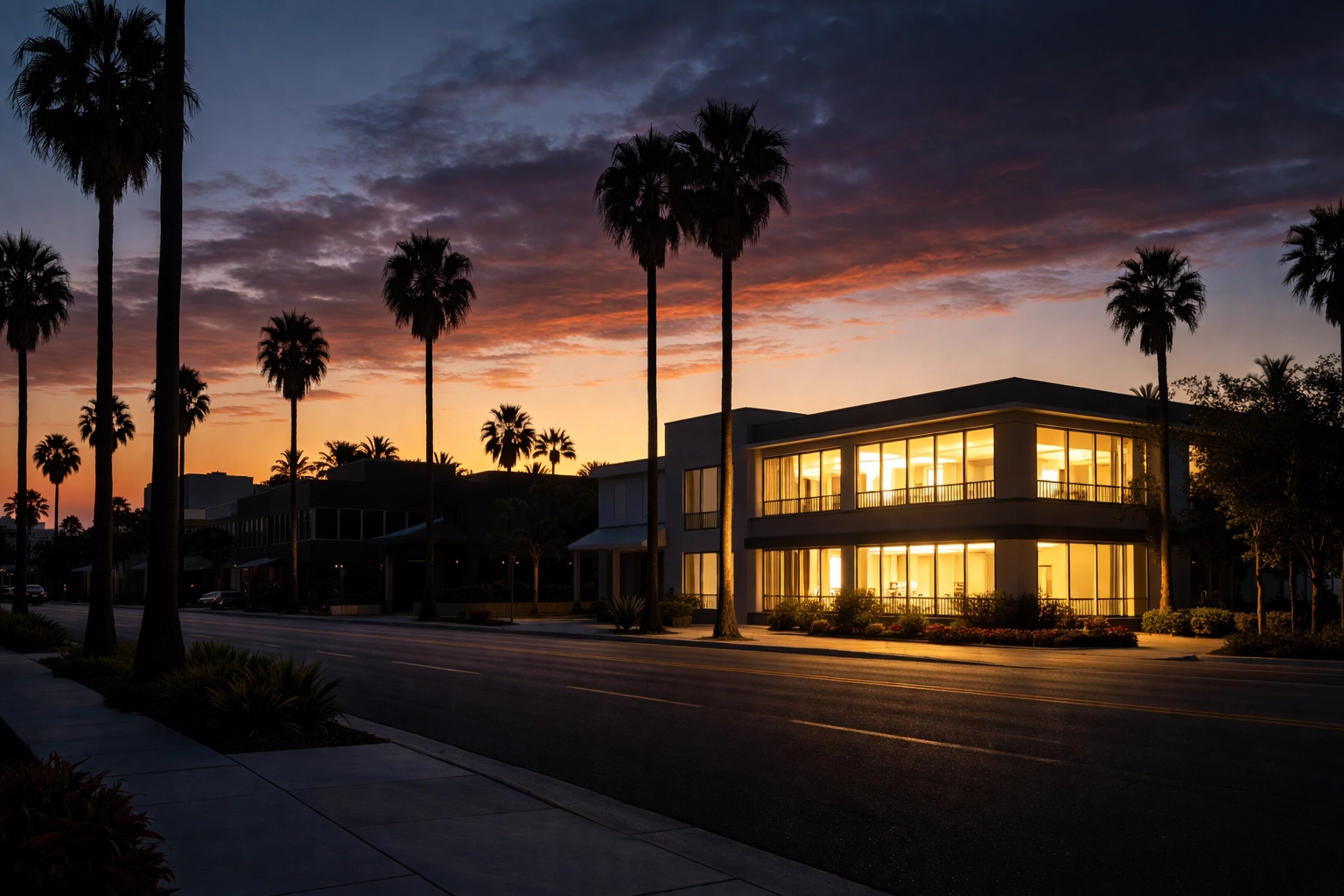
Business Continuity: The Cost of Being Unprepared
When the power goes out, everything stops. For a commercial operation, even a few hours of downtime can cascade into serious problems:
Lost revenue: Every hour without power means transactions that aren't happening, services that can't be delivered, and customers who go elsewhere.
Productivity losses: Your team can't work without electricity, and catching up after an extended outage often means overtime expenses and missed deadlines.
Reputational damage: Clients and customers expect reliability. Repeated service interruptions: even if they're not your fault: erode trust over time.
I've seen firsthand how businesses that lack backup power scramble during outages while their prepared competitors continue operating seamlessly. In my experience, the companies that invest in generators aren't just protecting against worst-case scenarios: they're gaining a competitive advantage.
A commercial backup generator automatically switches on in less than 10 seconds when grid power fails. That near-instant response means your operations continue with minimal disruption, your customers stay satisfied, and your revenue keeps flowing.
Protecting Your Equipment and Inventory
Beyond lost productivity, power outages pose direct threats to your physical assets.
Sensitive electronics are particularly vulnerable. Servers, point-of-sale systems, industrial controls, and specialized equipment can fail permanently when power cuts unexpectedly. The sudden loss and restoration of electricity creates voltage spikes that damage circuits and corrupt data. Replacing this equipment is expensive: and the data loss can be catastrophic.
Temperature-controlled inventory faces immediate risk during outages. If your business stores perishable goods, pharmaceuticals, or any products requiring climate control, a multi-hour outage can destroy thousands of dollars in inventory.
Manufacturing and processing equipment often requires controlled shutdown procedures. An unexpected power loss can damage machinery, ruin work in progress, and create safety hazards.
With a properly sized commercial generator, your critical systems stay powered throughout an outage. Your equipment shuts down properly when needed, your inventory stays protected, and your data remains secure.
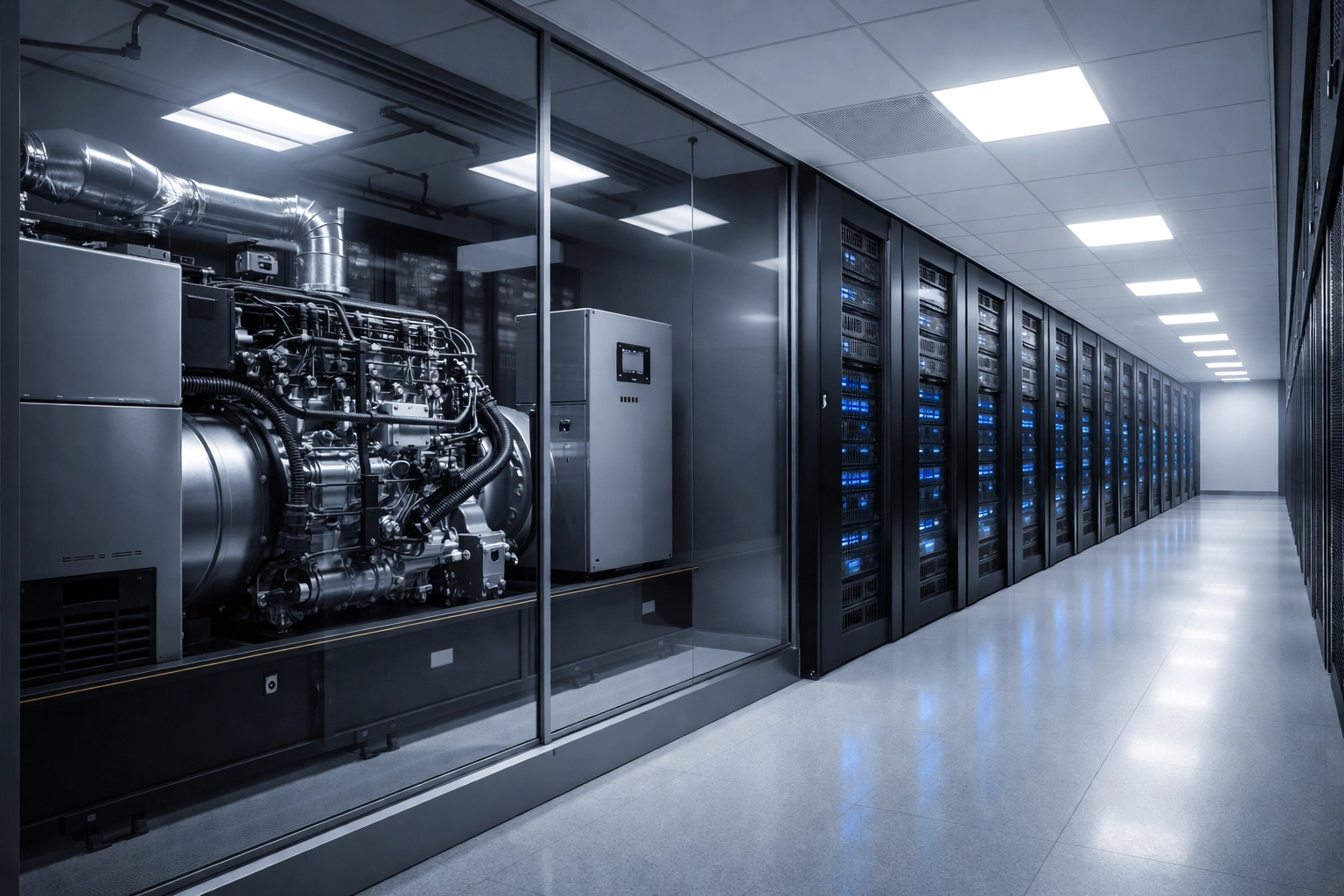
Safety and Security Never Take a Break
When the lights go out, so do many of your safety systems: unless you have backup power.
Commercial properties rely on electrical systems for:
Emergency lighting and exit signs
Fire alarm and suppression systems
Security cameras and access control
Elevator operation
HVAC systems that maintain safe working conditions
During an extended outage, a building without backup power becomes a liability. Employees and customers face safety risks, and your property becomes more vulnerable to break-ins and theft.
A commercial generator ensures these critical systems remain operational regardless of grid conditions. Your people stay safe, your assets stay protected, and you maintain compliance with building safety codes.
Understanding SoCal Compliance Requirements
Installing a commercial backup generator in Southern California isn't just about choosing the right equipment: you also need to meet specific regulatory requirements.
NFPA 110 Standards: All commercial generators in the region must comply with the National Fire Protection Association's standard for emergency and standby power systems. This covers everything from installation specifications to testing requirements.
Air Quality District Regulations: Depending on your location, different rules apply:
Los Angeles and Orange County: Operators must follow SCAQMD Rule 1470, which limits generator operation to 20-50 hours per year for testing and maintenance purposes.
San Diego County: Operators follow SDAPCD 69.4.1 with its own specific requirements.
Environmental Compliance: If your generator uses diesel fuel with storage exceeding 1,320 gallons, you'll need a Spill Prevention, Control, and Countermeasure (SPCC) plan. Facilities with more than 55 gallons of reserve fuel or battery acid must meet additional hazardous material requirements.
Noise Standards: Generator installations must limit noise emissions to 85 decibels, which affects equipment selection and placement.
Working with a licensed C-10 electrical contractor ensures your installation meets all applicable codes and passes inspection the first time.
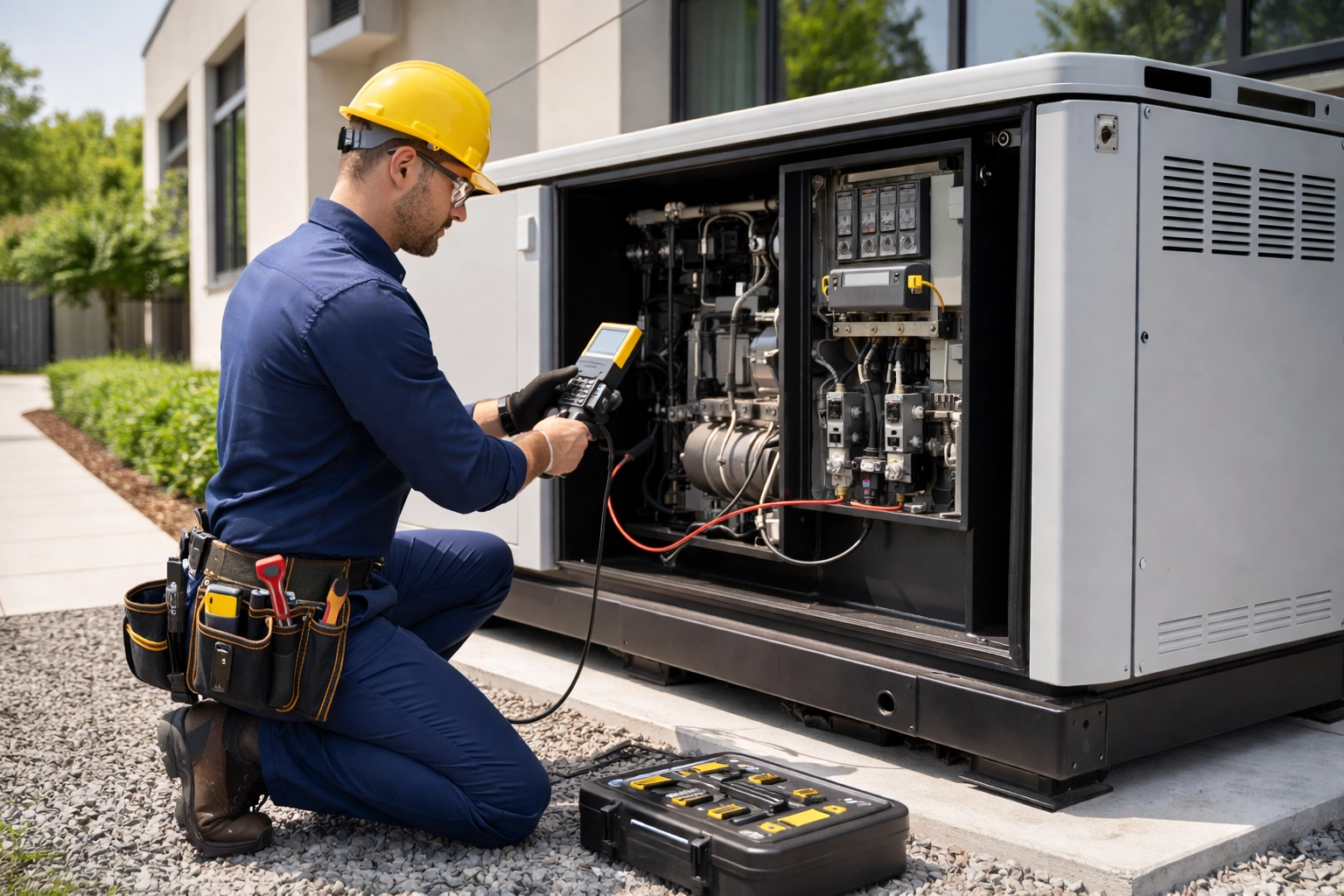
The Critical Role of Preventative Maintenance
A backup generator is only valuable if it works when you need it. That's why preventative maintenance isn't optional: it's essential.
Generator systems that sit idle between outages can develop problems that only become apparent during an emergency. By then, it's too late.
A comprehensive maintenance program includes:
Many commercial electrical maintenance mistakes stem from treating backup generators as "set it and forget it" equipment. The businesses that maintain their systems properly are the ones that stay powered during every outage.
Choosing the Right Generator for Your Facility
Selecting a commercial backup generator requires careful analysis of your specific needs:
Power requirements: Calculate the total load of all systems you need to keep running during an outage.
Fuel type: Natural gas, diesel, and propane each have advantages depending on your situation and local regulations.
Runtime needs: How long do you need to operate independently? This affects fuel storage requirements.
Installation location: Space constraints, noise considerations, and code requirements all influence placement.
Budget considerations: Balance upfront costs against long-term reliability and maintenance expenses.
A qualified commercial electrician can assess your facility, calculate your power needs, and recommend appropriate solutions that meet both your operational requirements and budget.
Take Action Before the Next Outage
Southern California's power reliability challenges aren't going away. PSPS events will continue. Grid stress will increase. The question is whether your business will be prepared.
Investing in a commercial backup generator protects your revenue, your equipment, your inventory, and your people. Combined with a proper maintenance program, it gives you confidence that your operations will continue no matter what happens to the grid.
At Current Electric Inc., we help commercial property owners across Southern California design, install, and maintain backup power systems that meet local codes and deliver reliable performance. If you're ready to protect your business, contact us today to discuss your backup power needs.


Comments